
UNESCO
Ephesus
İzmir
One of the best-preserved Roman cities of antiquity, famed for the Library of Celsus.
Byzantium was the Greek-speaking Christian Eastern Roman Empire, shaped by Constantine making Constantinople his capital in 330 CE. For centuries Anatolia was its heartland, providing soldiers, taxes and monastic life. After Manzikert in 1071 it lost most of Anatolia, endured Latin occupation of its capital in 1204–1261 (ruling meanwhile from Nicaea), and Constantinople fell to the Ottomans in 1453.
İzmir
One of the best-preserved Roman cities of antiquity, famed for the Library of Celsus.

İstanbul
The domed basilica Justinian raised in five years, and for a thousand years the largest enclosed space in the world.

İzmir
A royal capital on a steep acropolis, home to the steepest theatre of the ancient world.

Denizli
A spa and necropolis city built above the travertines of Pamukkale.

Kars
The 'city of 1001 churches', an abandoned medieval capital above the Arpaçay gorge.

Nevşehir
A cluster of monasteries and churches cut into the tuff; the frescoes of the Dark Church are among the best-preserved Byzantine paintings anywhere.

Trabzon
A monastery clinging to a 300-metre cliff above the Altındere valley, its rock church covered inside and out with frescoes.

İstanbul
An underground reservoir on 336 columns, holding the water of the palace quarter through a siege; two of them stand on reused Medusa heads, one upside down and one on its side.

İstanbul
Türkiye's first museum, founded by Osman Hamdi Bey: the Alexander Sarcophagus, the Kadesh treaty tablet and the Tiled Kiosk share one garden.
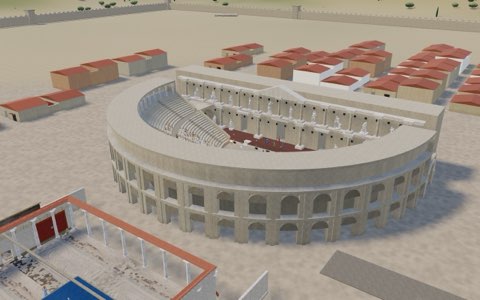
Haifa
King Herod's harbour city on Israel's Mediterranean coast: the Sebastos harbour, a seaside theatre, a hippodrome and a high-level aqueduct.

Antalya
A Lycian city known for its cliff of rock tombs and the church of Saint Nicholas.

Amasya
Capital of Pontus on the Yeşilırmak, with royal rock tombs and home of the geographer Strabo.

Nevşehir
An underground city descending eight levels and some 60 metres, with stables, churches, wineries and ventilation shafts enough for thousands of people.

İstanbul
The masterpiece of late Byzantine mosaic and fresco, holding the most complete surviving programme of Palaiologan painting.

Diyarbakır
Five point eight kilometres of basalt wall, reckoned the longest unbroken defensive circuit after the Great Wall, wrapping the Hevsel Gardens on the Tigris.

Antalya
A Seljuk fortress wrapping the peninsula in 6.5 kilometres of wall, with the shipyard and the Red Tower below it surviving from the years the city was a naval base.

Mersin
A sea castle on an islet two hundred metres offshore, closing the harbour from one side while Korykos Castle on the mainland closed the other.

Şanlıurfa
The home of the Göbekli Tepe and Karahan Tepe finds, and of the Balıklıgöl statue — the oldest known life-size sculpture of a human being.

Hatay
Holds one of the richest mosaic collections in the world, lifted from the Roman villas of Antioch and Samandağ.

İzmir
The museum of the Ephesus excavations, holding the two statues of Artemis and the frescoes and sculpture from the Terrace Houses.

Antalya
One of Anatolia's largest museums, with the imperial and divine sculpture of Perge, Lycian sarcophagi and the Elmalı coin hoard.

Muğla
Set inside the crusader castle, it holds one of the world's foremost collections of shipwreck finds, including the Bronze Age Uluburun wreck.

Çanakkale
Designed as a cube half-sunk into the ground near the mound, it lays out Troy's nine layers and traces what was carried away from the city.

Antalya
The walled old town wrapped around the Roman harbour, where Hadrian's Gate, the Fluted Minaret and Ottoman mansions stand along the same narrow lanes.

İstanbul
On an islet off Üsküdar: first a customs post, later a quarantine station, lighthouse and watchtower; the building standing today dates from the eighteenth century.
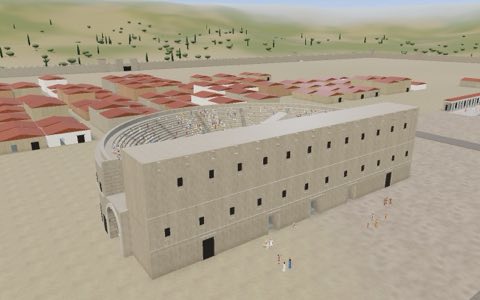
Jerash
Gerasa, one of the cities of the Decapolis: the Oval Forum, the colonnaded Cardo Maximus, the Temple of Artemis and the South Theatre.
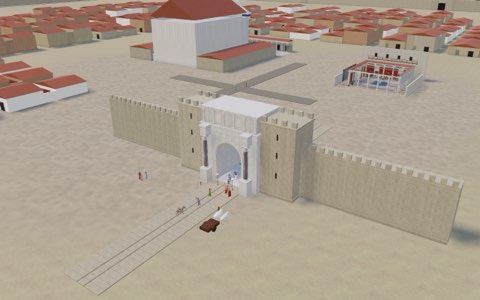
Amman
The acropolis of ancient Philadelphia: the Temple of Hercules, a Byzantine basilica and the Umayyad Palace.
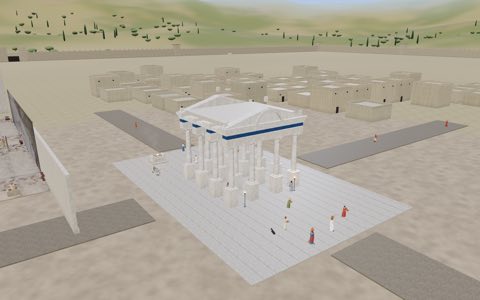
Bekaa
An Umayyad city in the Bekaa Valley based on Roman city planning: Cardo Maximus, Tetrapylon, Grand Palace, mosque and baths.
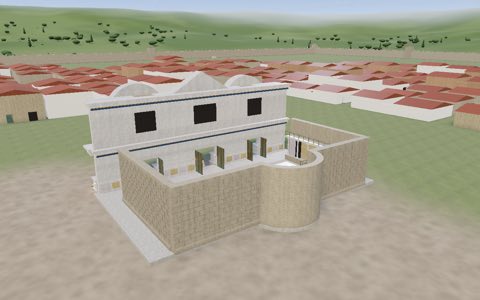
Sofia
Capital of Dacia Mediterranea: the Decumanus Maximus, the 4th-century Rotunda of St George, an amphitheatre and the eastern gate.
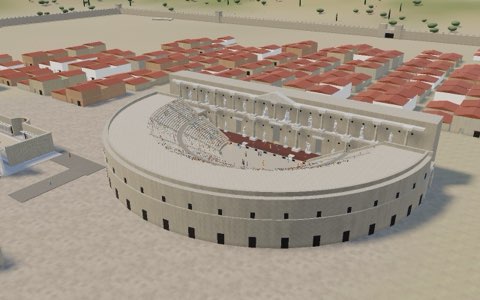
Northern District
The only Decapolis city west of the Jordan River: Palladius Street, a Roman theatre seating about 7,000, public bathhouses and the tell of the Egyptian-ruled town.

Antalya
Lycia's largest city and the capital of monumental tomb architecture.

Burdur
A mountain city at 1,500 m, famous for its restored and still-flowing fountain.

Bursa
A lakeside city with 5 km of standing walls, host of the church councils.

Elazığ
A historic mound and castle town rising above Elazığ, spanning Urartu to Ottoman times.

Nevşehir
Wider and lower-ceilinged than Derinkuyu, with four levels open to visitors and tunnels that still run beneath the village houses above.

Aksaray
A canyon cut 100 metres deep by the Melendiz river, its walls honeycombed with frescoed rock churches.

Diyarbakır
One of Anatolia's oldest mosques, its two-storey courtyard front built from columns and capitals lifted straight out of the city's Roman buildings.

İstanbul
Two tiers of arches bridging the valley between two hills — the last link in a 250-kilometre line from the Thracian springs, kept in repair and in use through Ottoman centuries.

İstanbul
The mosaic floor of the Byzantine Great Palace courtyard, kept where it was found and roofed over: scenes of hunting, herding and animals rather than of court life.

İzmir
Gathering finds from the Smyrna agora and the Ionian cities around it — Klazomenai, Teos — and known for its collection of Roman portrait sculpture.

İzmir
The finds from the acropolis, the Asklepion and the Red Basilica, including the pieces of the Great Altar that never went to Berlin.

Denizli
Set inside the vaulted halls of the Roman baths of Hierapolis, showing the reliefs taken from the city's theatre and sarcophagi from Lycia and Caria.

Antalya
The Roman bath of Side, repaired after excavation and turned into the museum: the sculpture from the agora and theatre now stands in the rooms where the city washed.

Adana
Moved into the halls of a textile mill founded at the start of the twentieth century — one of the largest museum buildings in Türkiye — gathering the Hittite and Roman finds of the Çukurova plain.

Mardin
In the 19th-century mansion of the Syriac patriarchate, laying out the region's layers from Assyria to the Artuqids through the finds of Girnavaz and Dara.

Ankara
The citadel wrapping the hill the city grew on, its walls built course by course from column drums and inscribed blocks stripped out of Roman buildings.

İzmir
A stone house on Bülbüldağı held to be where Mary spent her last years — visited by popes, and a place of pilgrimage for Christians and Muslims alike.

İstanbul
The granite obelisk Thutmose III raised at Karnak, moved to the Hippodrome in AD 390; the reliefs on its base show step by step how it was set upright.

Antalya
At Demre, the church where Nicholas of Myra — the source of the Father Christmas story — was buried, its floor mosaics and part of its frescoes still in place.

Denizli
A wealthy trading city of the Lycus valley with two theatres and broad avenues.

Çanakkale
Founded by Antigonus, one of Alexander's generals, it was one of the largest ancient cities of Anatolia.

Sinop
The oldest Greek colony on the Black Sea; birthplace of Diogenes and namesake of the pigment sinopia.

Mardin
A Byzantine frontier garrison with rock-cut cisterns and a monumental necropolis.

Batman
A historic town split by the Tigris, with cave settlements ten thousand years old.

Hatay
A 1.4-kilometre Roman diversion tunnel, cut through solid rock by hand to keep floodwater out of the harbour of Seleucia Pieria.

Nevşehir
A rock settlement spread over three valleys, lived in without a break until 1952, when the danger of collapse emptied it.

Mardin
The oldest continuously inhabited Syriac Orthodox monastery in the world, its domed church on the Turabdin plateau given mosaics by Byzantine emperors.

Kayseri
The quiet valley of Cappadocia: dozens of churches cut into its slopes, their frescoes standing — unlike Göreme's — mostly without a crowd in front of them.

Trabzon
The Kostaki mansion, its painted ceilings and joinery left in place, turned into a museum with the region's Roman and Byzantine finds on the floor below.

Çorum
The central museum for the Hattusa, Alacahöyük and Şapinuwa excavations, holding the Hittite cuneiform tablets, seals and bull figurines they produced.

Aydın
Gathering the finds of Miletus, Didyma and Priene, it lays out in one hall what a city whose four harbours silted up managed to leave behind.

Antalya
Showing the town's Roman and Seljuk layers together, with the sarcophagi in its garden and a bronze Herakles statuette as its best known pieces.

Kayseri
Holding the finds of the Kültepe-Kanesh excavation, including the cuneiform tablets and clay envelopes of the Assyrian merchants.

İstanbul
The city's second largest covered cistern: each of its 224 columns is two shafts set one on the other, the stone collars at the joins still visible.

İstanbul
Built under Theodosius II to store the water the Valens aqueduct brought in; its hall of thirty-two marble columns was repaired and opened to visitors in 2018.

Sakarya
The 430-metre bridge Justinian threw over the Sakarya. The river later shifted its bed, so the bridge now stands largely on dry ground.

Mersin
Set right on the shore at Anamur, its thirty-nine towers and moat make it the largest and best preserved castle on the Mediterranean coast.

İstanbul
The seven-towered fortress Mehmed II grafted onto the Golden Gate of the Theodosian walls, used as treasury, arsenal and the state prison where envoys were held.

İstanbul
Türkiye's first private museum: of its two waterfront houses at Büyükdere, one is given to Anatolian archaeology and one to Ottoman craft.

İstanbul
The bronze column the thirty-one Greek cities that beat Persia at Plataea cast from captured weapons and dedicated at Delphi, brought to the Hippodrome in the fourth century AD.

İstanbul
The porphyry column Constantine set at the centre of his forum when he founded the new capital: the city's oldest standing monument, in the same place for seventeen centuries.

İstanbul
The city's first church, where the Second Ecumenical Council met in 381. It was never converted into a mosque, so the interior survives as it was.

Hatay
A cave church cut into the mountainside, held to be where the community of Antioch met — the first people anywhere to be called Christians.

İzmir
The six-domed basilica Justinian raised over the tomb of John; when it was finished it was the largest church after Hagia Sophia.

Bartın
Walls wrapping the headland between two bays and the island opposite; Genoese coats of arms still sit above its gates, and a neighbourhood lives inside it.

Şanlıurfa
The citadel looking down on the pool of Balıklıgöl, its two Corinthian columns and the Syriac inscription between them left from a monument raised by the kings of Edessa.

Diyarbakır
A Roman garrison town on the Persian frontier, whose rock-cut Mithraeum is the best preserved temple of that cult known in Anatolia.

Adana
The Roman bridge over the Seyhan has been in continuous use for seventeen centuries and carried motor traffic until 2007.

Bursa
The tombs of the first two Ottoman rulers stand side by side over the remains of a Byzantine monastery, whose floor mosaic can still be seen in Orhan's.

İzmir
The capital of the Aydınid emirate: its great mosque, madrasas and the Çakırağa mansion show the passage from emirate to empire in one fabric.

Çanakkale
A Greek harbour city on the Troad coast of the Sea of Marmara, famed for its odeon and its coinage.

Niğde
A Roman city at the gate of Cappadocia, with aqueducts and a sacred pool.

Bartın
A harbour city on a peninsula between two bays, its walls still in daily use.

Mersin
This well-preserved Roman–Late Roman coastal city on the Mediterranean stands out with its baths, aqueduct and vast necropolis.

Aksaray
A collection running from the Neolithic levels of Aşıklı Höyük to the Byzantine burials of the Ihlara valley, and one of Anatolia's lesser known sets of mummies.

Kars
Holding the finds from the Ani excavations, its garden of Russian-era steam engines and church bells telling the city's last two centuries.

Sinop
The remains of the Serapis temple are kept in place in its garden, and the collection tells the trade of Sinope, the Black Sea's port city.

Samsun
Known for the Hellenistic gold hoard lifted from the Amisos tumulus, and holding the Early Bronze Age finds of the İkiztepe excavation.

Diyarbakır
Gathering the excavations of the upper Tigris basin, weighted towards the Neolithic finds of Çayönü and Artuqid metalwork.

Adıyaman
Shows the finds of Mount Nemrut and Arsameia alongside the mosaics rescued from the towns that went under the waters of the Atatürk dam.

Edirne
Brings the finds of the Thracian dolmens and tumuli together under one roof with the ethnography of Edirne, the Ottoman capital.

Mersin
A monastery on a terrace a thousand metres up in the Taurus; the stone drum of its east church is the best preserved of the dome experiments that came before Hagia Sophia.

Trabzon
Older than Sümela, the monastery leans into the steep side of the Maçka valley; under the Empire of Trebizond it kept the land registers of the region.

Nevşehir
The underground city north of Avanos, with a defensive arrangement unique in Cappadocia: pipes cut between the storeys so that hot oil could be poured on attackers.

Kahramanmaraş
Gathering the Halaf-period finds of Domuztepe and Neo-Hittite reliefs, and displaying the fossil elephants of the region alongside them.

Afyonkarahisar
The central museum for Phrygia, weighted towards the Roman sarcophagi and sculpture cut at the marble quarries of Docimium.

Kastamonu
Gathering finds from the rock tombs of Paphlagonia and the Pompeiopolis excavation, in the very hall where Atatürk announced the hat reform.

İzmir
On a slope above the Torbalı plain, known for its council house, its theatre and a bath-gymnasium built to serve two thousand people.

Muğla
On the shore of Lake Bafa among the boulders of the Beşparmak range, its Hellenistic walls running six kilometres around the slope.

Antalya
The harbour of Myra, where the vast granary built by Hadrian records the stop this coast made for the grain fleet running from Egypt to Rome.

Niğde
The frescoes in this rock-cut monastery's church are among the best preserved in Cappadocia, and include the rare Byzantine image in which the Virgin is shown smiling.

Erzurum
An inner citadel founded under Theodosius, with the Tepsi Minaret added by the Saltukids and still serving as the city's clock tower.

Mersin
On the hill commanding the Göksu valley, the castle was the key to Cilicia through the crusades, its ditch cut straight into the rock.

Mersin
A Roman island city on the Mersin coast, with a theatre and cisterns.

Mersin
The ancient city at Silifke, with a Temple of Zeus, a theatre and a medieval castle.

Afyonkarahisar
A major Byzantine military city, remembered for its Arab sack of 838.

İstanbul
One of Thrace's longest caves: its Lower Palaeolithic layers hold the oldest human traces around the Sea of Marmara, its upper ones a Byzantine church.

Nevşehir
The rock settlement near Gülşehir is made up of dwellings and stables rather than churches — the clearest picture in Cappadocia of how a provincial Byzantine landowner lived.

Uşak
Built on a promontory ringed on three sides by deep gorges, its walls, temple and rock tombs still largely standing.

Denizli
Founded where Lydia, Caria and Phrygia meet; its colonnaded street and great church have been brought out by recent excavation.

Muğla
A harbour town on a peninsula, famed for its fishing and for the blue-and-white veined marble that Rome sold as cipollino.

Antalya
The city of Opramoas, Lycia's greatest benefactor, whose tomb carries one of the longest records of public giving to survive from antiquity.
Karaman
A settlement cut five storeys into a valley wall, its stairs running inside the rock and its top floor reachable only from within.
Nevşehir
An underground city with four separate entrances — stables, ovens and church spaces — and one of the uncrowded ones in Cappadocia.
Kırklareli
In the Istranca forest, the longest surviving stretch of the line that carried water to Constantinople, and a rare design carrying two separate channels one above the other.

İstanbul
The open cistern at Bakırköy held the water of the imperial palace at Hebdomon, and its walls — 127 metres by 76 — still stand to full height.

Zonguldak
A port city at Filyos whose name has survived unchanged since antiquity.

Elazığ
A historic town east of the Euphrates with a castle bearing Urartian inscriptions.

Adana
A Roman city on a limestone outcrop rising from the middle of the Cilician plain, famous for its monumental triumphal arch and fortress.