
UNESCO
Ani
Kars
The 'city of 1001 churches', an abandoned medieval capital above the Arpaçay gorge.
Urartian fortresses and stone cities on high plateaus.
Kars
The 'city of 1001 churches', an abandoned medieval capital above the Arpaçay gorge.

Van
The Urartian capital on a rock ridge overlooking Lake Van.

Van
An Urartian fortress with royal palace, temple and an irrigation canal still in use.

Malatya
A mound that holds one of the earliest known palaces in the world.

Elazığ
A historic mound and castle town rising above Elazığ, spanning Urartu to Ottoman times.

Elazığ
A historic town east of the Euphrates with a castle bearing Urartian inscriptions.

Van
A magnificent castle of the 17th-century Mahmudi principality, south of Van.

Van
The Church of the Holy Cross on an island in Lake Van, famous for its carved reliefs.

Erzincan
An Urartian fortress city in Üzümlü district, Erzincan, with an apadana palace and an open-air temple.

Van
An Urartian fortress built by King Rusa II on the eastern shore of Lake Van, famous for its exceptionally well-preserved Temple of Haldi.

Ağrı
A palace on the slope above the Silk Road at Doğubayazıt, fusing Seljuk, Ottoman, Georgian and Armenian architecture in one building.

Van
One of the few museums anywhere with an Urartian collection of this depth: the bronze belts, helmets and cuneiform tablets from Çavuştepe, Ayanis and Toprakkale.

Erzurum
Gathering the Early Bronze Age and Urartian finds of eastern Anatolia, with the black burnished pottery of the Karaz culture at its core.

Kars
Holding the finds from the Ani excavations, its garden of Russian-era steam engines and church bells telling the city's last two centuries.

Van
A twelve-sided tomb tower above Lake Van at Gevaş — the best preserved piece of Kara Koyunlu stonework and, for its geometric carving, the emblem of the district.

Erzincan
Built for the Saltukid ruler Mama Hatun, the tomb stands at the centre of a circular walled court — a plan with no other example in Anatolia.

Malatya
The central museum for the Arslantepe excavation, holding the oldest known swords in the world and the palace finds of the fourth millennium BC.

Erzurum
The largest open-courtyard madrasa in Anatolia, its portal flanked by two brick minarets and carved with tree-of-life reliefs at the height of Seljuk stonework.

Erzurum
An inner citadel founded under Theodosius, with the Tepsi Minaret added by the Saltukids and still serving as the city's clock tower.

Erzurum
A seven-arched Ilkhanid bridge over the Aras, its ashlar work and pointed arches making it the most imposing medieval bridge in eastern Anatolia.

Erzurum
Three Saltukid tomb towers standing side by side; the oldest, that of Emir Saltuk, is taken as the beginning of the form in Anatolia.

Uttar Pradesh
The white marble tomb the Mughal emperor Shah Jahan built for his wife Mumtaz Mahal on the bank of the Yamuna at Agra; with its four minarets, red sandstone mosque, four-part garden and great gate, it was finished in 1653.
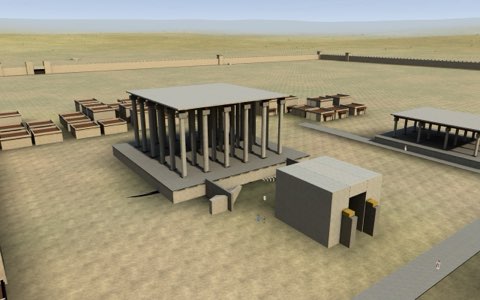
Fars
The ceremonial capital of the Achaemenid Persian Empire: Gate of All Nations, the 72-column Apadana palace, the Hall of a Hundred Columns and reliefs of delegations bringing tribute.
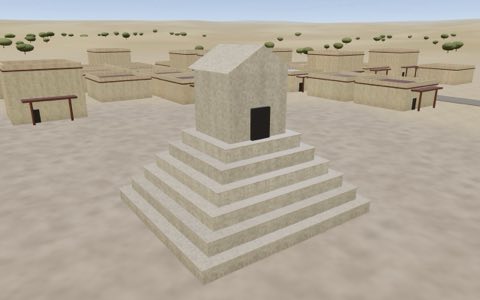
Fars
The first capital of the Persian (Achaemenid) Empire: the six-step tomb of Cyrus the Great, palace remains and the earliest known Chahar Bagh garden.
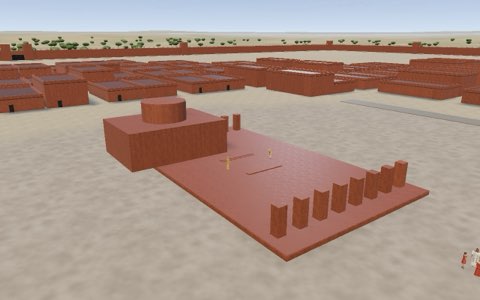
Sindh
A baked-brick city of the Indus Valley Civilisation: the Great Bath waterproofed with bitumen, buildings on a grid plan and covered drains along the streets.
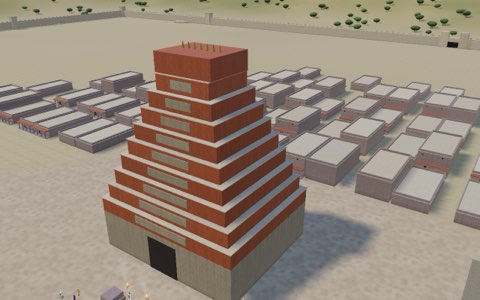
Karnataka
The capital of the Vijayanagara Empire: the Virupaksha Temple, the granite Stone Chariot of the Vittala Temple, the Elephant Stables and the Lotus Mahal.
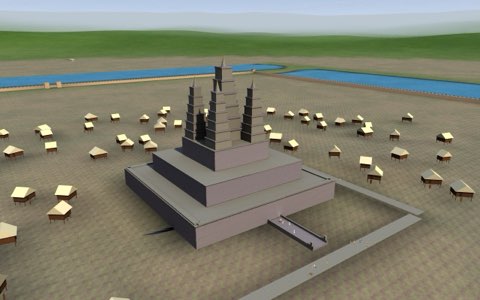
Siem Reap
A Khmer temple of five towers believed to represent Mount Meru, ringed by a moat 190 metres wide; considered the largest religious structure in the world.
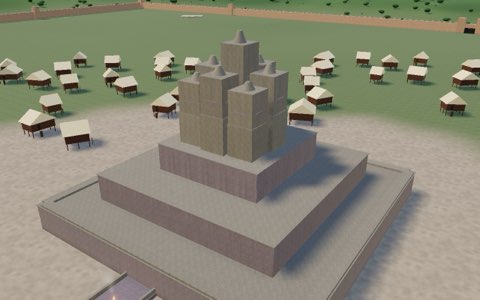
Siem Reap
The temple of smiling stone faces: King Jayavarman VII's state temple, its towers adorned with about 200 gigantic faces, with reliefs of historical events and everyday Khmer life.