
Patara
Antalya
Capital of the Lycian League, home to what may be the world's first parliament building.
Lycian rock tombs, Pamphylian theatres and coastal cities.
Antalya
Capital of the Lycian League, home to what may be the world's first parliament building.

Antalya
Lycia's largest city and the capital of monumental tomb architecture.

Antalya
A Lycian city known for its cliff of rock tombs and the church of Saint Nicholas.

Antalya
Ruins wrapped in laurel forest beside the never-dying flames of Chimaera.

Antalya
A seaside port city with three natural harbours ringed by pine forest.

Antalya
Pamphylia's grandest Roman city, with a colonnaded street and central water channel.

Antalya
The best-preserved ancient theatre in the world — still hosting concerts today.

Antalya
An ancient city woven into a modern town, famed for its Apollo temple on the point.

Antalya
An eagle's nest city at 1,050 m that Alexander the Great failed to take.

Burdur
A mountain city at 1,500 m, famous for its restored and still-flowing fountain.

Muğla
A Lycian city at the foot of Mount Cragus, famous for its round royal tomb.

Muğla
Above the Xanthus valley, famous for the colossal inscription of the Epicurean Diogenes.

Mersin
A Roman island city on the Mersin coast, with a theatre and cisterns.

Mersin
The ancient city at Silifke, with a Temple of Zeus, a theatre and a medieval castle.

Muğla
Letoon, a Lycian sanctuary dedicated to Leto and her twins Apollo and Artemis, is listed together with Xanthos as a UNESCO World Heritage Site.

Antalya
Limyra in Finike, Antalya, is a Lycian city known for the tomb monument of Pericles of Limyra, a Roman theatre and the Kaineus relief.

Antalya
Arykanda, a spectacular Lycian city built on terraces facing the mountains, offers a unique panorama over the Finike plain.

Muğla
Tlos, with its Bellerophon rock tomb and fortress atop a cliff, is one of the oldest and largest cities of Lycia.

Burdur
Kibyra, known as the 'City of Gladiators', is famous for its world-renowned Medusa mosaic in the odeon and its gladiator school.

Isparta
Antioch of Pisidia, a Roman colony city where Paul the Apostle preached, is famous for its Temple of Augustus (Augusteum).

Mersin
This well-preserved Roman–Late Roman coastal city on the Mediterranean stands out with its baths, aqueduct and vast necropolis.

Mersin
The sacred centre of the priest-kings of Olba, the city is famous for the standing columns of the Temple of Zeus Olbios.

Osmaniye
The Late Hittite fortress is preserved as an open-air museum thanks to the bilingual inscription that unlocked the decipherment of Luwian hieroglyphs.

Adana
A Roman city on a limestone outcrop rising from the middle of the Cilician plain, famous for its monumental triumphal arch and fortress.

Hatay
A Bronze Age city of the Amuq plain, famous for the cuneiform archive of King Niqmepa.

Hatay
A 1.4-kilometre Roman diversion tunnel, cut through solid rock by hand to keep floodwater out of the harbour of Seleucia Pieria.

Antalya
One of the oldest known human dwellings in Anatolia: a great karst cave used without a break from the Palaeolithic to the classical age.

Antalya
A Seljuk fortress wrapping the peninsula in 6.5 kilometres of wall, with the shipyard and the Red Tower below it surviving from the years the city was a naval base.

Mersin
A sea castle on an islet two hundred metres offshore, closing the harbour from one side while Korykos Castle on the mainland closed the other.

Hatay
Holds one of the richest mosaic collections in the world, lifted from the Roman villas of Antioch and Samandağ.

Antalya
One of Anatolia's largest museums, with the imperial and divine sculpture of Perge, Lycian sarcophagi and the Elmalı coin hoard.

Antalya
The Roman bath of Side, repaired after excavation and turned into the museum: the sculpture from the agora and theatre now stands in the rooms where the city washed.

Adana
Moved into the halls of a textile mill founded at the start of the twentieth century — one of the largest museum buildings in Türkiye — gathering the Hittite and Roman finds of the Çukurova plain.

Antalya
Showing the town's Roman and Seljuk layers together, with the sarcophagi in its garden and a bronze Herakles statuette as its best known pieces.

Antalya
Next door to Karain, the cave is one of the few places where the passage from the end of the ice age to the Neolithic is recorded in an unbroken sequence of layers.

Antalya
On the bank of the Alara stream, the han was the first stop on the road inland from the port of Alanya, guarding it together with the rock castle above.

Mersin
Set right on the shore at Anamur, its thirty-nine towers and moat make it the largest and best preserved castle on the Mediterranean coast.

Mersin
A monastery on a terrace a thousand metres up in the Taurus; the stone drum of its east church is the best preserved of the dome experiments that came before Hagia Sophia.

Antalya
The walled old town wrapped around the Roman harbour, where Hadrian's Gate, the Fluted Minaret and Ottoman mansions stand along the same narrow lanes.

Mersin
With thirty-three settlement layers, one of the longest continuously inhabited mounds in the world; its Chalcolithic walls are among the earliest fortifications known.

Kahramanmaraş
The largest known settlement of the Halaf culture; the mass burial called the Death Pit is among the most argued-over finds in prehistoric Anatolia.

Antalya
On a flat-topped hill over the plain, one of the few Anatolian cities Alexander failed to take; the only substantial inscription in the Pamphylian dialect was found here.

Burdur
A Roman colony in Pisidia ringed by cliffs, where the siege ramp and camp the Romans built to put down the revolt of AD 278 can still be traced.

Kahramanmaraş
Gathering the Halaf-period finds of Domuztepe and Neo-Hittite reliefs, and displaying the fossil elephants of the region alongside them.

Burdur
Holding the finds of the Sagalassos excavation, and with them the Neolithic painted pottery of the Hacılar mound.

Antalya
The city of Opramoas, Lycia's greatest benefactor, whose tomb carries one of the longest records of public giving to survive from antiquity.

Antalya
The harbour of Myra, where the vast granary built by Hadrian records the stop this coast made for the grain fleet running from Egypt to Rome.

Antalya
A Pisidian city eleven hundred metres up above the Köprülü canyon, its theatre for ten thousand still standing in the middle of a village.

Burdur
Excavated by James Mellaart in the 1950s, the mound produced the earliest and richest Neolithic painted pottery in Anatolia.
Antalya
Human and animal figures are incised on the walls of this rock shelter above the shore — among the oldest rock art known in Anatolia.
Kahramanmaraş
At the foot of the Taurus, the cave was a seasonal camp for hunting groups at the end of the ice age, and its excavation documents the period before farming.

Antalya
At Demre, the church where Nicholas of Myra — the source of the Father Christmas story — was buried, its floor mosaics and part of its frescoes still in place.

Hatay
A cave church cut into the mountainside, held to be where the community of Antioch met — the first people anywhere to be called Christians.

Mersin
On the hill commanding the Göksu valley, the castle was the key to Cilicia through the crusades, its ditch cut straight into the rock.

Adana
The Roman bridge over the Seyhan has been in continuous use for seventeen centuries and carried motor traffic until 2007.

Antalya
The aqueduct feeding the city crosses its valley on an inverted siphon worked by pressure towers — among the most ambitious pieces of Roman hydraulic engineering.
Tunis
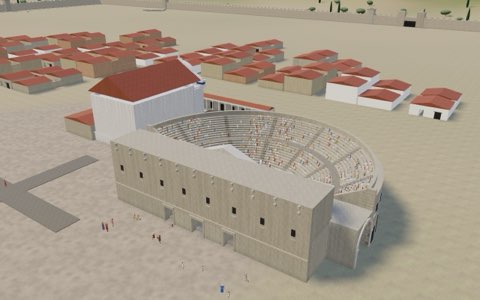
Punic and Roman Carthage: Byrsa Hill, the circular military harbour (cothon) and the Antonine Baths.
Mahdia
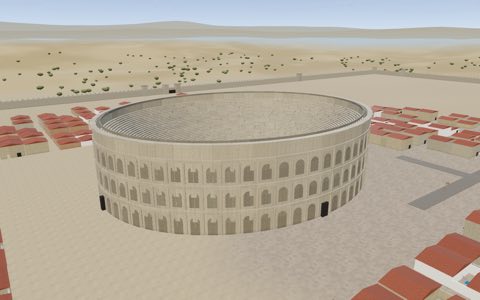
The three-storey Roman amphitheatre of Thysdrus in Tunisia: its main axes measure 148 and 122 metres, and its capacity is estimated at between 27,000 and 35,000 spectators.
Batna
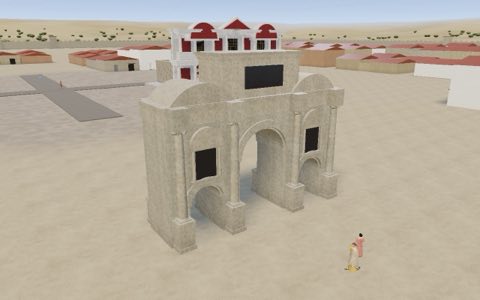
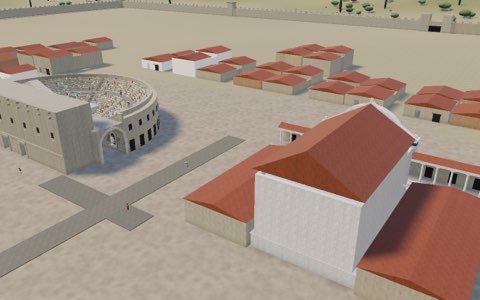
A Roman colony founded by Trajan around AD 100: a grid-planned city with Trajan's three-arched arch, a 3,500-seat theatre and a public library.
Sétif
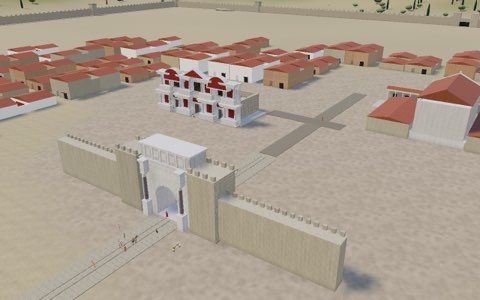
Cuicul, a Roman city adapted to mountainous terrain: the Arch of Caracalla of AD 216, a temple dedicated to the Septimian family, two forums and a theatre.
Fès-Meknès
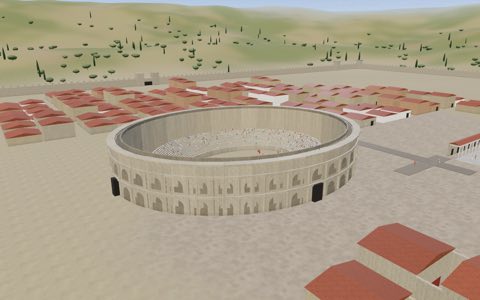
The most important city of the province of Mauretania Tingitana: the Arch of Caracalla of AD 217, the Basilica, the Capitolium and mosaic-floored houses.
Tanger-Tétouan
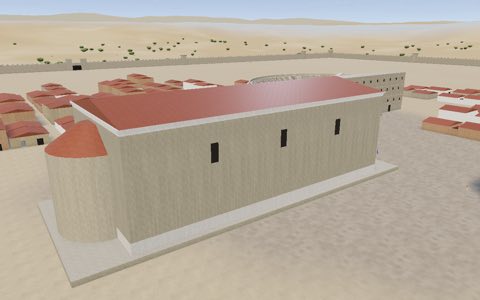
A Phoenician city on the Loukkos river linked with the myth of the Garden of the Hesperides: the hilltop temple quarter, a Roman amphitheatre and fish-salting (garum) factories.
Murqub
The Roman city where Septimius Severus was born: his four-way arch, the Severan Basilica, the new forum and the theatre.
Zawiya
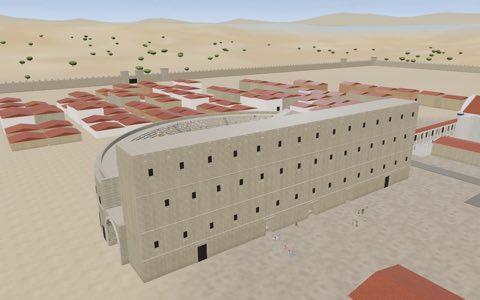
Sabratha, one of the major cities of Tripolitania: a Roman theatre close to the sea with a three-level stage wall (scaenae frons) of 96 columns, over 22 metres high.