
UNESCO
Göbekli Tepe
Şanlıurfa
The world's oldest known temple complex — T-shaped pillars that rewrote history.
The world's oldest temples and cities along the Euphrates.
Şanlıurfa
The world's oldest known temple complex — T-shaped pillars that rewrote history.

Gaziantep
The Euphrates city of villa mosaics, home of the 'Gypsy Girl'.

Adıyaman
Colossal god statues and a royal burial tumulus at 2,150 metres.

Şanlıurfa
An ancient city of beehive houses and the first university of the Islamic world.

Mardin
A Byzantine frontier garrison with rock-cut cisterns and a monumental necropolis.

Gaziantep
A royal city on the Euphrates, famed for its Hittite and Neo-Hittite reliefs.

Gaziantep
Zincirli Höyük, capital of a Neo-Hittite kingdom, famed for its gateway lions.

Adıyaman
Royal cult centre of the Kingdom of Commagene at Eski Kahta, famous for its colossal Mithridates relief.

Batman
A historic town split by the Tigris, with cave settlements ten thousand years old.

Şanlıurfa
A sacred hill and rock tombs in the Tektek Mountains, dedicated to the moon god Sin.

Şanlıurfa
A pre-pottery Neolithic sanctuary in Şanlıurfa, known as Göbekli Tepe's 'sister site' for its T-shaped pillars and sculptures.

Şanlıurfa
A pre-pottery Neolithic settlement on the Euphrates now flooded by the Atatürk Dam reservoir, famous for its cult building and stone head sculptures.

Diyarbakır
Five point eight kilometres of basalt wall, reckoned the longest unbroken defensive circuit after the Great Wall, wrapping the Hevsel Gardens on the Tigris.

Mardin
A city terraced down the slope above the Mesopotamian plain, its carved limestone madrasas, mosques and Syriac churches standing side by side.

Diyarbakır
One of Anatolia's oldest mosques, its two-storey courtyard front built from columns and capitals lifted straight out of the city's Roman buildings.

Adıyaman
A Roman bridge crossing the Cendere in a single arch, three of the four columns raised by the XVI Legion for Septimius Severus and his family still standing.

Diyarbakır
An Artuqid bridge spanning the Batman river in a single arch of more than 38 metres — among the widest stone spans of the Middle Ages — with chambers in its flanks where travellers slept.

Mardin
The oldest continuously inhabited Syriac Orthodox monastery in the world, its domed church on the Turabdin plateau given mosaics by Byzantine emperors.

Mardin
Seat of the Syriac Orthodox patriarchate for centuries; the vaulted room beneath it survives from a sun temple that stood here before the monastery.

Gaziantep
The largest mosaic museum in the world, showing the floors rescued from Zeugma before the Birecik dam flooded the city.

Şanlıurfa
The home of the Göbekli Tepe and Karahan Tepe finds, and of the Balıklıgöl statue — the oldest known life-size sculpture of a human being.

Mardin
In the 19th-century mansion of the Syriac patriarchate, laying out the region's layers from Assyria to the Artuqids through the finds of Girnavaz and Dara.

Diyarbakır
Gathering the excavations of the upper Tigris basin, weighted towards the Neolithic finds of Çayönü and Artuqid metalwork.

Adıyaman
Shows the finds of Mount Nemrut and Arsameia alongside the mosaics rescued from the towns that went under the waters of the Atatürk dam.

Gaziantep
The largest known open-air sculpture workshop of the Near East: more than three hundred half-finished lions, sphinxes and mountain gods lie across the slope where they were left.

Gaziantep
The mound on the İslahiye plain was the capital of a city state in the second millennium BC; its basalt-footed palace and gate have been re-erected and can be walked through.

Şanlıurfa
The citadel looking down on the pool of Balıklıgöl, its two Corinthian columns and the Syriac inscription between them left from a monument raised by the kings of Edessa.

Diyarbakır
A Roman garrison town on the Persian frontier, whose rock-cut Mithraeum is the best preserved temple of that cult known in Anatolia.
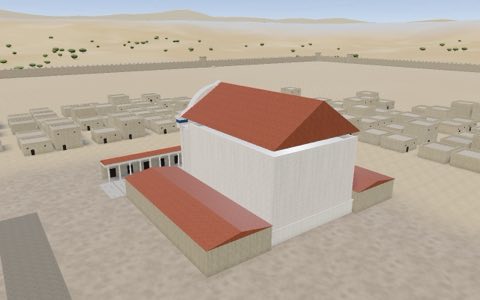
Homs
In a Syrian desert oasis: the Great Colonnade of about 1.1 kilometres, the Temple of Bel, the Monumental Arch and the capital of Queen Zenobia.
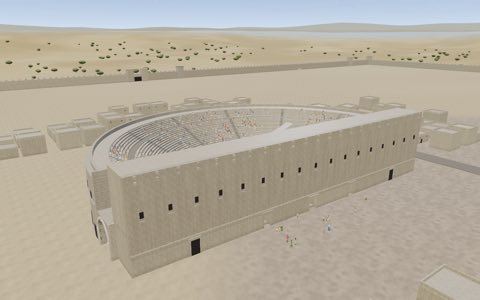
Daraa
The capital of the province of Arabia Petraea: a black basalt Roman theatre enclosed by an Ayyubid fortress, a Nabataean arch, a colonnaded street and a 6th-century cathedral.
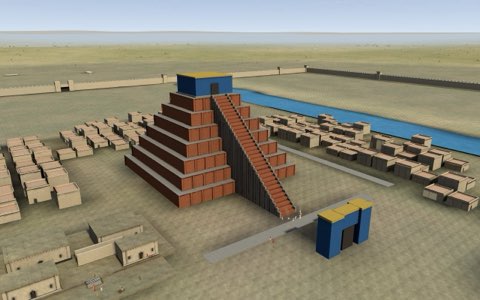
Babil
The ancient capital in Mesopotamia: the blue glazed-brick Ishtar Gate, the Processional Way, the Etemenanki Ziggurat and the capital of Hammurabi.
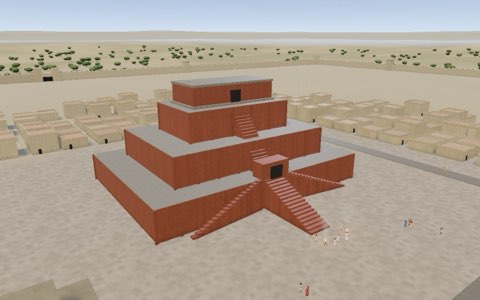
Dhi Qar
The Sumerian city-state of Ur in southern Mesopotamia: the Ziggurat of Ur dedicated to the moon god Nanna, the royal tombs and many cuneiform tablets.