
UNESCO
Aphrodisias
Aydın
A Roman city beside its own marble quarries, famous for its school of sculpture.
First Roman emperor
63 BCE – 14 CE
Augustus ended the civil wars and founded the Roman Empire as its first emperor. Under him the province of Galatia was created in 25 BCE, and a long period of peace and urban growth began in Anatolia. The walls of the Temple of Augustus and Rome in Ankara preserve the most complete copy of the Res Gestae, his own account of his deeds. Fragments of the text have also been found in Anatolian cities such as Pisidian Antioch.
Aydın
A Roman city beside its own marble quarries, famous for its school of sculpture.
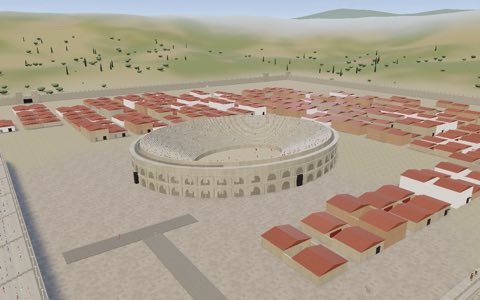
Tarragona
Capital of Hispania Tarraconensis: a Roman amphitheatre by the sea, a circus estimated at 30,000 seats and the provincial forum.
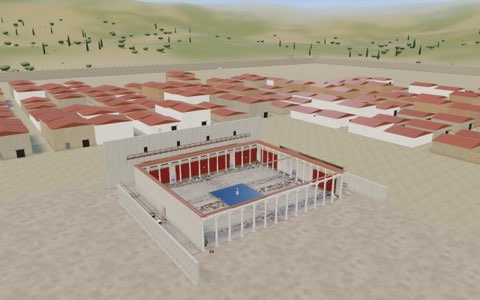
Coimbra
One of the largest Roman settlements excavated in Portugal: the House of Fountains with its mosaics and water-feature peristyle, the forum, baths and a defensive wall.
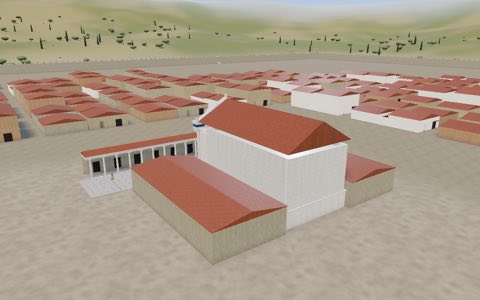
Évora
One of the best-preserved Roman temples on the Iberian Peninsula: 14 surviving Corinthian columns with granite shafts and Estremoz marble capitals, in the Roman forum.
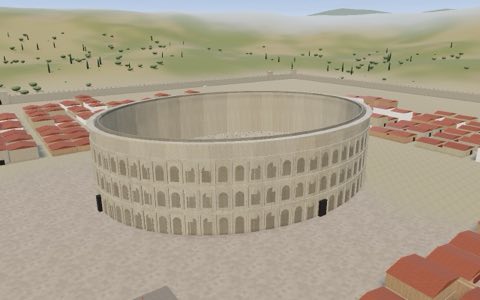
Istria
The Pula Roman Arena (about 23,000 spectators in Roman times), the Temple of Augustus and Roma, and the Arch of the Sergii.
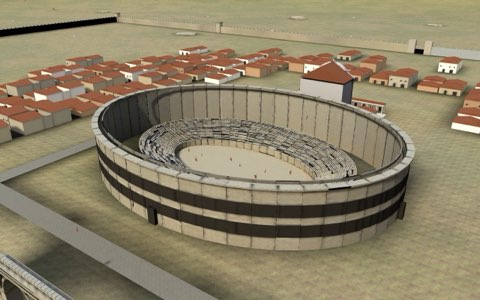
Gard
Nemausus, a Roman colony in Gaul: the Maison Carrée, an arena that held about 24,000 spectators and the Pont du Gard bridge of the aqueduct that fed the city.
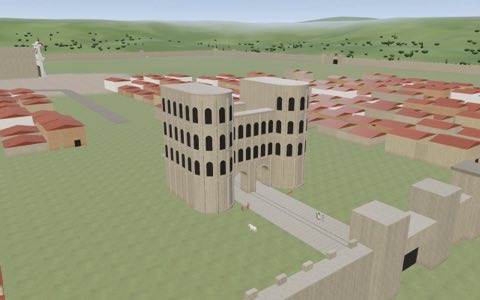
Rhineland-Palatinate
One of the four capitals of the Roman Empire during the Tetrarchy: the Porta Nigra, the amphitheatre, the Basilica of Constantine and the Imperial Baths.
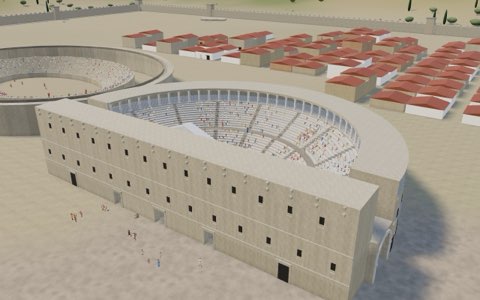
Badajoz
The capital of Lusitania: its Roman theatre, Temple of Diana, amphitheatre and the Roman bridge over the Guadiana.

Isparta
Antioch of Pisidia, a Roman colony city where Paul the Apostle preached, is famous for its Temple of Augustus (Augusteum).

Adana
A Roman city on a limestone outcrop rising from the middle of the Cilician plain, famous for its monumental triumphal arch and fortress.